For your community
Bring people together around a shared garden and a practical way to grow food.
JPiOT / Laman Kebun Agro IoT
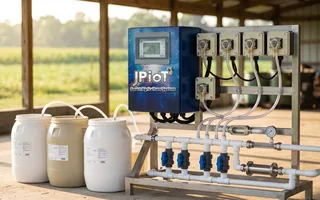
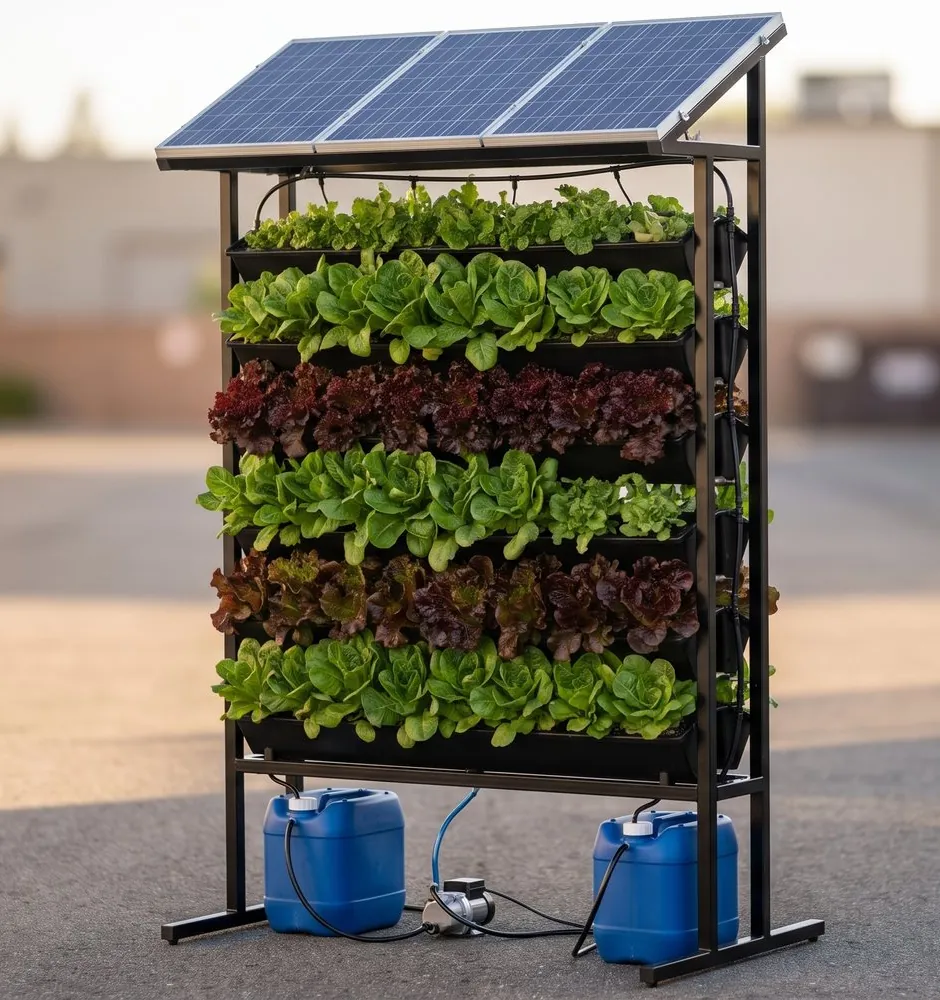
Meet the Agro-IoT Garden Site: a solar-powered vertical hydroponic garden that brings growing, automated care and smart monitoring together in one unit.
Small footprint, bigger possibilities
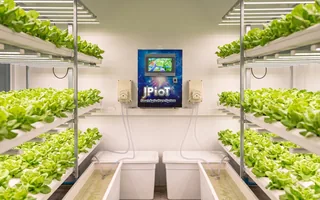
Bring fresh greens into everyday spaces. This modular garden combines vertical farming with solar power and recirculating water, making room for food production in schools, communities and urban settings.
01Energy
A fully DC system powers the garden without an AC inverter. Battery storage supports operation at night and on cloudy days.
02Water
Nutrient solution returns to the reservoir for recirculation, and the system layout also supports rainwater collection.
03Space
120 pots arranged vertically make productive use of compact spaces. A portable, modular design keeps installation simple.
The system, connected
Power, water and nutrients work together. Choose a step: the schematic highlights the parts involved and says what happens there.
1 Capture · Solar energyThe panel charges the battery through the DC charge controller, and DC power distribution supplies the pumps. No AC inverter is used.
2 Prepare · Water and nutrientsDosing pumps add fertiliser A, fertiliser B and pH adjuster to the water in the reservoir.
3 Circulate · Feed the gardenThe DC water pump lifts the solution to the top of the vertical system, and it runs down through the planted pots.
4 Return · Recover and repeatSolution drains back to the reservoir. Sensors read water level, pH and EC there and temperature at the rack, and the router carries those readings out.
Illustrative growing loop. Not an installation drawing, and not an equipment-control interface.
Smart monitoring
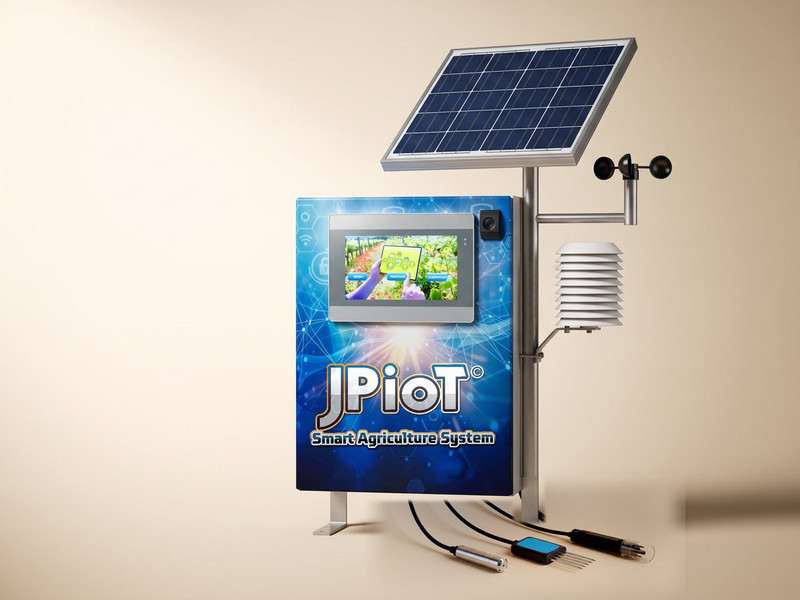
Check water conditions, energy and pump status without standing beside the garden. Monitoring connects through the system’s 4G or Wi-Fi router.
Laman Kebun Agro IoTSystem overview
Example readingsExample readings as printed in the product materials. This page is not connected to a garden, and these values are not recommended settings.
A reading tells you the current condition: how much water is left, how warm the solution is, and whether the pump is running. What the system does about it depends on the equipment installed and the configuration agreed for your site.
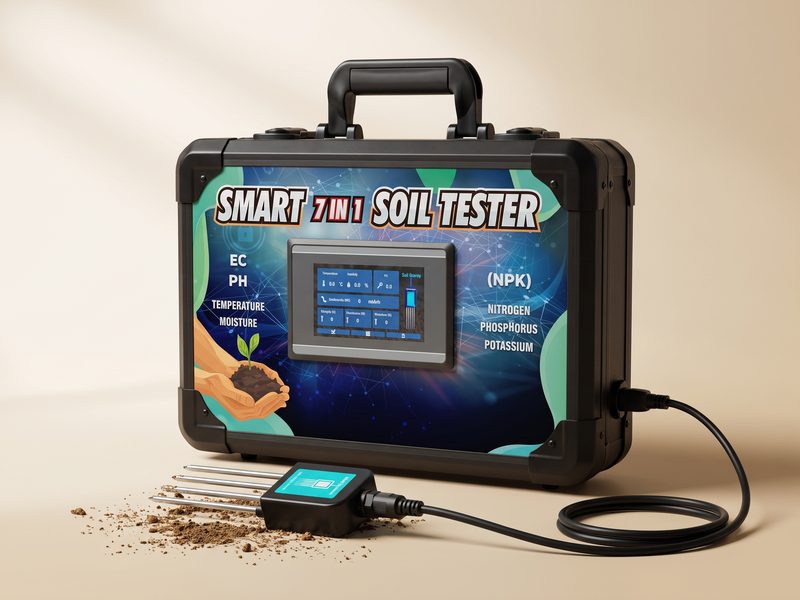
Which readings appear for your garden depends on the sensors fitted. The Telegram demo below shows the wider Farm Pulse catalogue, not a list of what is included.
Try the Telegram demoThe bot shows the latest readings from our demonstration farm, not from a garden, each with the time it was measured. It sends no Telegram messages.
This shared JPiOT demo includes features across different monitoring configurations. Sensors and integrations for your garden are confirmed in your quotation.
The complete setup
From solar generation to nutrient delivery, these are the core parts shown in the product materials. Choose a number on the drawing to read about it.
Schematic drawing of the unit, not a product photograph.
Choose a number to read about it. Nine parts are marked on the drawing.
Generates the DC power the system runs on.
Manages charging between the panel and the battery.
Stores power for night-time and cloudy days. Capacity is sized for your site; this page states no runtime.
The rack itself: the product materials describe 120 pots, planted in vertical rows.
Holds the nutrient solution that circulates through the rack, and receives it back.
Lifts the solution from the reservoir to the top of the rack.
Dosing pumps for fertiliser A, fertiliser B and pH adjuster, each from its own tank.
Water level, pH and EC in the reservoir, with temperature at the rack. The sensors fitted for your garden are listed in your quotation.
Feeds the pumps and electronics from the battery, with no AC inverter.
The final configuration for your site — panel and battery sizing, the number of pots, and which sensors are included — is confirmed in your quotation.
See the product posterRoom to grow
A garden for urban and rural spaces, community farming, school projects and sustainable food production — the settings listed in the product materials.
Crops listed in the product materials
Which of these suit your site is discussed during the assessment.
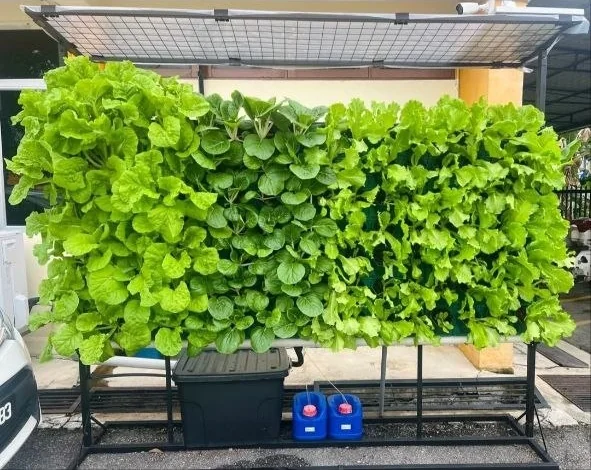
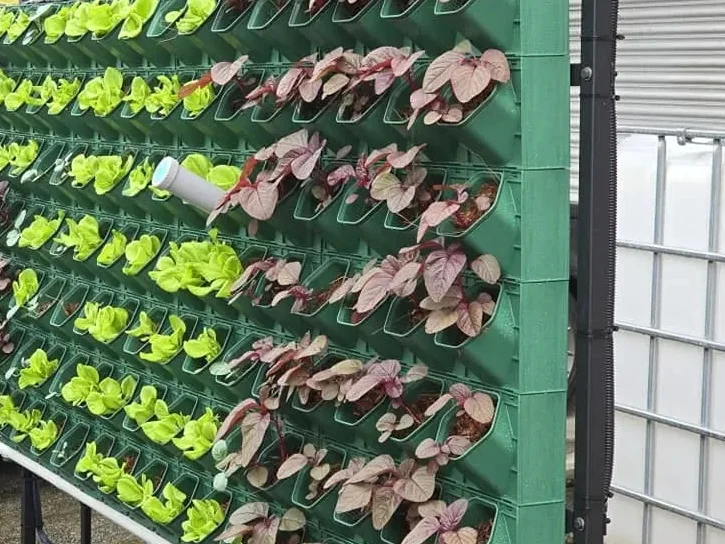
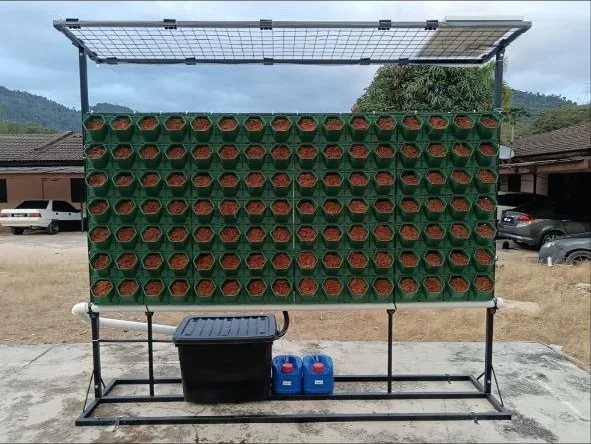
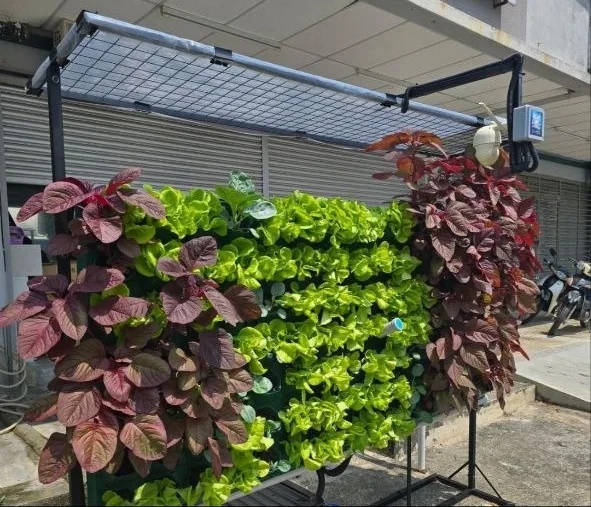
Photographs from different sites, supplied by JP Global. They show installed, planted gardens, not measured outcomes.
Bring people together around a shared garden and a practical way to grow food.
Make solar energy, hydroponics and connected technology tangible in school projects.
Explore vertical growing where ground space is limited, with a compact, modular system.
Enquire
Tell us where you want to grow and what you have in mind. Your answers go into a WhatsApp message you can check before sending.
Prefer to call?+60 10-211 0447