

01Home
02JPIoT
03Services
04About
05Contact

JPiOT / Smart Fertigation

The right feed.Two ways to deliver it.

Prepare nutrient solution in a mixing tank, or dose directly into the irrigation line. JPiOT brings EC, pH and dosing control into one connected system.
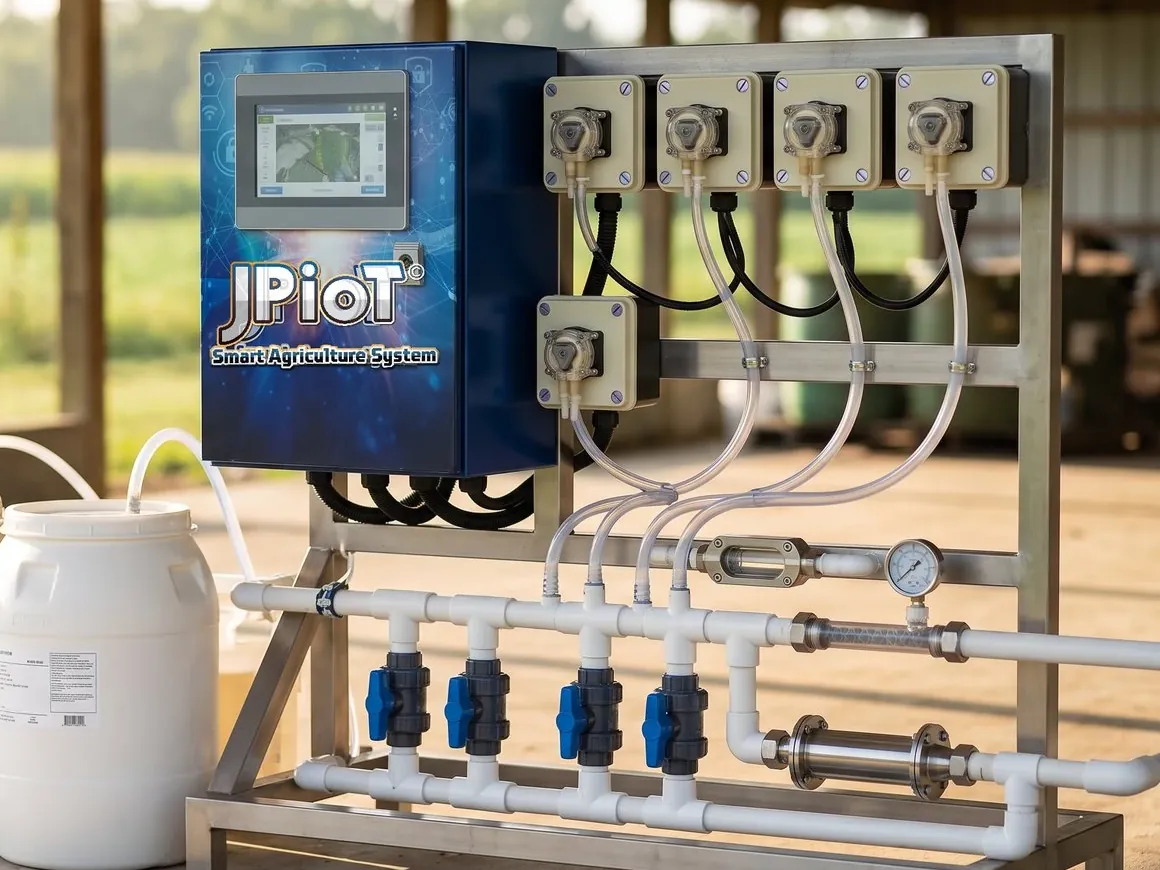
An illustration of a fertigation station: a JPiOT controller beside five dosing pumps on a stainless frame, with solution drums and a PVC manifold with valves
IllustrationA visualisation of a fertigation station, not a photograph of an installation.

What fertigation is

Fertiliser, carried by the irrigation water.

Fertigation means dissolving fertiliser in irrigation water, so the crop is fed through the same lines that water it. What reaches the roots is a solution, and its strength and acidity decide how useful it is.
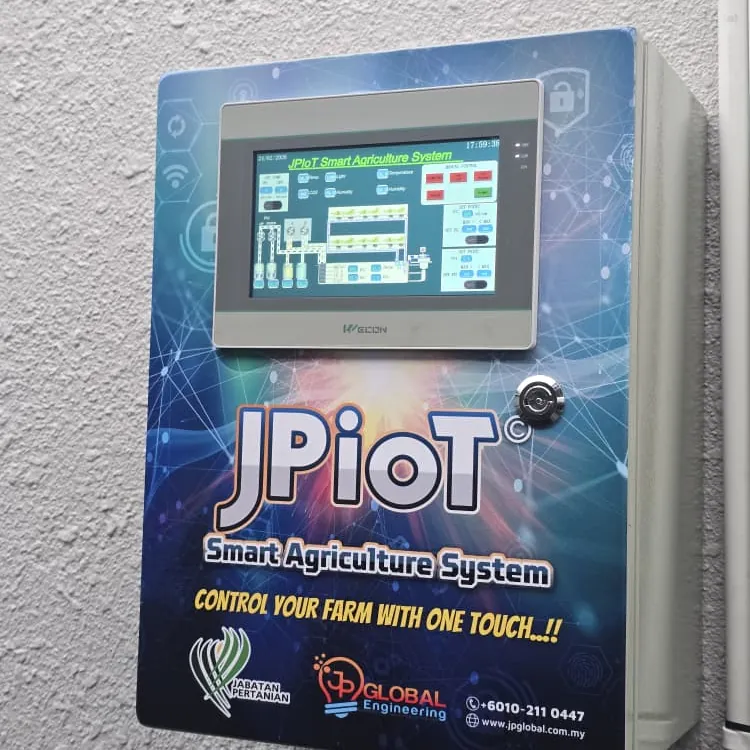
  1. A JPiOT controller mounted on a wall, its touchscreen showing a diagram of tanks and pumps
    The controller’s touchscreen

    01

    Measure

    The controller reads the solution’s EC and pH, along with temperature, level and pressure where they are measured.
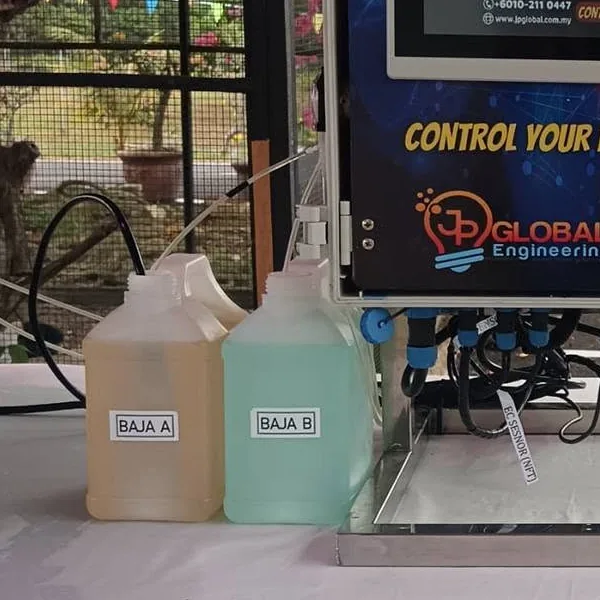
  2. Two containers labelled Baja A and Baja B beside a JPiOT controller, with a tube running up from each
    Baja A and Baja B, tubed to the pumps

    02

    Dose

    It adds fertiliser A, fertiliser B and pH adjustment towards the targets configured for your crop.
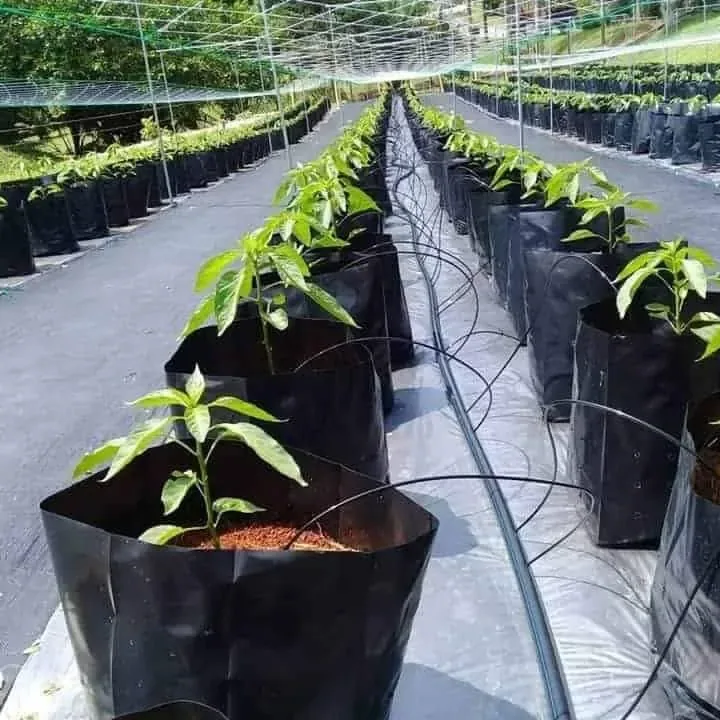
  3. Drip lines running along rows of young plants in black polybags
    Drip lines to the polybags

    03

    Deliver

    It runs the irrigation schedule that sends the solution to the crop.

JPiOT does this in two configurations. The difference is where the mixing happens. Compare them

Compare

Mix first, or dose in line?

The same controller, two plumbing arrangements. Here they are side by side.

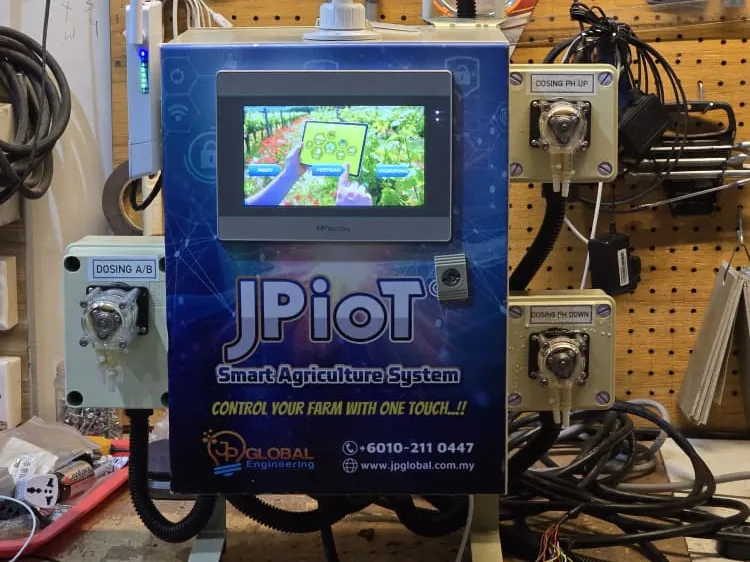
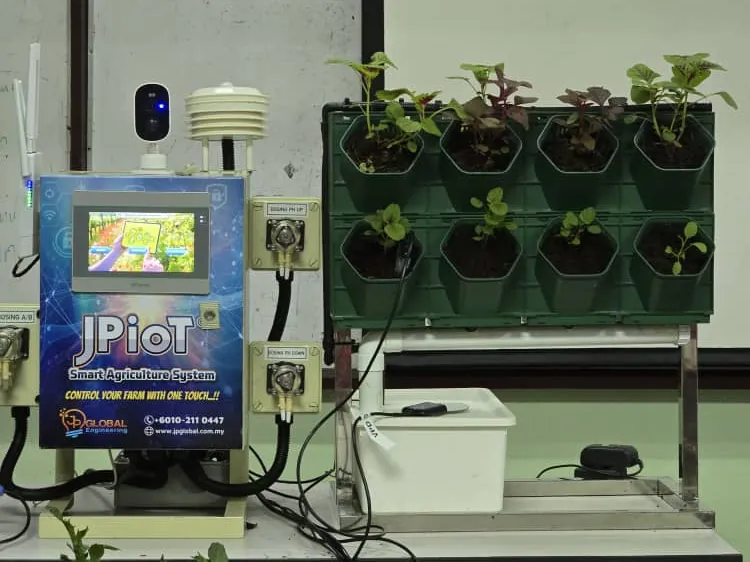
A JPiOT controller on a workshop bench, with dosing pumps labelled Dosing A/B on its left and Dosing pH up and Dosing pH down on its right
The pump style the product sheet shows for the mixing-tank system, on a JPiOT controller in the workshop.

Configuration 1

Mixing tank fertigation

Nutrients and pH adjustment are mixed into water in a dedicated tank before delivery to the crop. Useful when the farm’s design calls for preparing a batch of feed before distribution.

Follow the flow
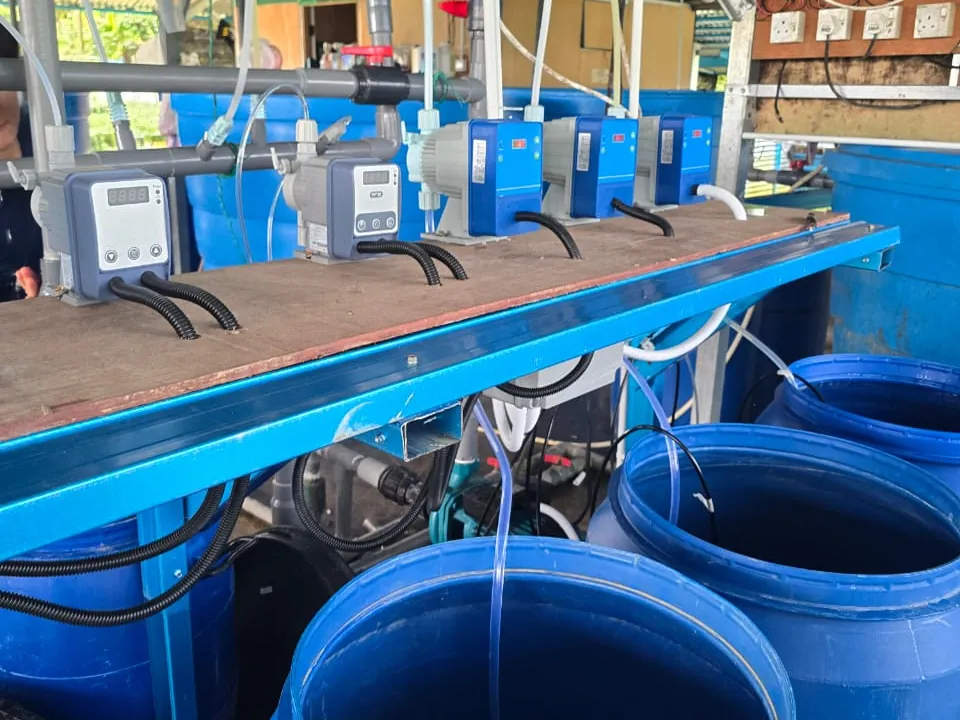
A row of dosing pumps with digital displays on a blue bench, with tubes running into blue drums below
The pump style the product sheet shows for the injector system, on a bench at a site.

Configuration 2

Injector fertigation

Separate dosing pumps introduce fertiliser and pH-adjustment solution into a flowing water line, with a static mixer and inline sensing. Does not need a separate nutrient mixing tank; it can still use a main water tank or water supply.

Follow the flow
Mixing tank and inline injector fertigation compared
Mixing tankInline injector
Where mixing happens Mixing tankIn a dedicated mixing tank, before delivery. Inline injectorIn the flowing line, through a static mixer after the injection points.
Separate mixing tank Mixing tankYes, a nutrient mixing tank is part of the system. Inline injectorNo separate nutrient mixing tank. Water still comes from a main tank or water supply.
Dosing arrangement Mixing tankDosing pumps add fertiliser A, fertiliser B and pH adjustment into the tank. Inline injectorSeparate dosing pumps inject fertiliser A, fertiliser B and pH adjustment at their own points along the line.
Measurements shown in the reference Mixing tankEC, pH, temperature and level in the tank; pressure on the delivery line. Inline injectorEC, pH and pressure, measured inline after the static mixer.
Space and plumbing considerations Mixing tankRoom for the mixing tank and its plumbing between the water supply and the delivery pump. Inline injectorRoom along the line for the injection points, static mixer and inline sensors; the line’s flow and pressure are part of the design.
Farm requirements to discuss Mixing tankBatch size, how many zones share a batch, filling and delivery times, available space. Inline injectorLine flow and pressure, how zones are switched, water quality, space along the line.

Neither is better for every farm. Flow, pressure, crop, zone layout, water quality and your existing installation decide which suits yours. Whether zones share one feed or need different ones is part of that discussion too.

“Reference” is the JPiOT fertigation product sheet.

How it works

Follow the water. See where control happens.

Choose a configuration, then a step. The schematic highlights the parts involved and says what happens there.

Mixing tank fertigation

1 FillWater from the main supply fills the mixing tank.

2 MeasureSensors in the tank read EC, pH, temperature and level, and send the readings to the controller.

3 Dose and mixDosing pumps add fertiliser A and fertiliser B from their own containers, plus pH-up or pH-down solution only if the reading calls for it, following the configured control logic.

4 CheckThe controller compares the new readings with the targets configured for your crop. Until they are reached, dosing and mixing continue.

5 DeliverAt the scheduled time, the delivery pump sends the prepared solution to the crop zones set for it. Line pressure can be watched where a pressure sensor is fitted.

Mixing-tank fertigation: explanatory schematicWater from the main supply fills the mixing tank. Fertiliser A, fertiliser B and pH-up or pH-down solution are dosed into the tank from separate containers by their own dosing pumps. Sensors in the tank send EC, pH, temperature and level readings to the JPiOT controller, which commands the dosing pumps. A delivery pump sends the prepared solution to three crop zones, with pressure monitored where a sensor is fitted.JPiOT controllerECpHMain watersupplyPumpValveMixingtankECpH°CLevelDosing channelsABpH+pH−pH up or down,only as neededDeliverypump(where fitted)PressureZone 1Zone 2Zone 3 Mixing-tank fertigation: explanatory schematicWater from the main supply fills the mixing tank. Fertiliser A, fertiliser B and pH-up or pH-down solution are dosed into the tank from separate containers by their own dosing pumps. Sensors in the tank send EC, pH, temperature and level readings to the JPiOT controller, which commands the dosing pumps. A delivery pump sends the prepared solution to three crop zones, with pressure monitored where a sensor is fitted.JPiOT controllerECpHMain watersupplyPumpMixing tankLevelECpH°CABpH+pH−pH up or down,only as neededDelivery pumpPressure(where fitted)Zone 1Zone 2Zone 3

Inline injector fertigation

1 FlowWater from the main tank or water supply enters the irrigation line, moved by the feed pump.

2 InjectSeparate dosing pumps inject fertiliser A and fertiliser B at their own points along the line, and pH-up or pH-down solution only when needed.

3 MixA static mixer, a pipe section with fixed internal elements and no moving parts, blends the solution as it flows.

4 MeasureInline sensors after the mixer report EC, pH and pressure to the controller.

5 AdjustThe controller adjusts the dosing from these readings, following the configured feedback, to bring EC and pH back towards target.

6 DeliverThe solution continues through the irrigation lines to the crop.

Inline injector fertigation: explanatory schematicA feed pump moves water from the main tank or supply along the irrigation line. Separate dosing pumps inject fertiliser A, fertiliser B and pH-up or pH-down solution at their own points along the line. A static mixer blends the solution, and inline sensors after it send EC, pH and pressure readings to the JPiOT controller, which adjusts the dosing. The solution continues to the crop.JPiOT controllerECpHMain watersupplyFeed pumpStatic mixerDosing channelsABpH+pH−pH up or down,only as neededECpHPressureInline sensorsTo the crop Inline injector fertigation: explanatory schematicA feed pump moves water from the main tank or supply along the irrigation line. Separate dosing pumps inject fertiliser A, fertiliser B and pH-up or pH-down solution at their own points along the line. A static mixer blends the solution, and inline sensors after it send EC, pH and pressure readings to the JPiOT controller, which adjusts the dosing. The solution continues to the crop.JPiOT controllerECpHMain water supplyFeed pumpStatic mixerABpH+pH−pH up or down,only as neededECpHPressureInline sensorsTo the crop
  • Water
  • Nutrient solution
  • Fertiliser A
  • Fertiliser B
  • pH adjustment (up / down)
  • Reading to the controller
  • Dosing command

Explanatory schematic, not an installation drawing or a control interface.

Control and monitoring

Readings in, dosing out.

The controller acts on a handful of readings. Knowing what each one tells you makes the rest of the system easy to follow.
ECElectrical conductivity
How readily the solution conducts electricity. It rises with the amount of dissolved fertiliser salts, so it indicates the solution’s overall strength. It does not measure each nutrient: nitrogen, potassium and the rest are not read separately.
pHAcidity or alkalinity
How acidic or alkaline the solution is. It affects how available nutrients are to the roots, which is why it is held within a configured range with pH-up or pH-down solution.
TemperatureOf the solution
Conductivity changes with temperature, so the two are read together. Temperature is also useful context for the root zone.
LevelIn the tank
How much water or solution the tank holds: context for filling, dosing and delivery, and an early sign of a supply problem.
PressureIn the line
Shows whether the line is delivering as expected. A sudden rise or fall can point to a closed valve, a blocked filter or a pump problem.
A JPiOT controller with a dosing pump on either side and a camera and sensor shield on top, beside a vertical planter with a reservoir
A JPiOT controller and its dosing pumps, set up with a vertical planter.

What the controller does

  • Automatic EC & pH controlDoses towards the EC and pH targets configured for your crop.
  • Dosing pump controlRuns the fertiliser A, fertiliser B and pH dosing pumps, and sets their rate in an injector system.
  • Irrigation schedulingStarts delivery at the times, and to the zones, you set.

Targets. EC and pH targets are configured for your crop, its growth stage and your water. No single setting suits every farm.

Monitoring. Readings, records and alerts show what the system is doing; they don’t change the dosing by themselves.

What it watches

A living view of the farm.

Follow the latest readings from our connected farm sensors.

Values appear as each sensor reports them, except weight: shown in kilograms, with a reading below zero as 0 kg.

Weight scale

Straight from the scale.

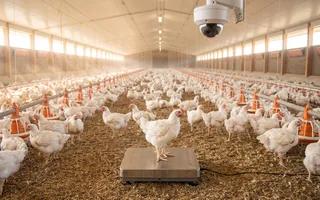
The newest reading from the weighing scale on the farm above, on its own. A scale weighs everything on its platform together: in a growing setup, the container, medium, crop and the water the medium holds, so watering raises the reading and drying brings it down.

Farm

JPiOT · Telegram monitoring

Your farm.
Your data.
One conversation.

Check the conditions that matter, right from Telegram. Choose a system, open a sensor, and see its reading, status and next step.

Try the interactive demo. No Telegram account needed.

  1. 01Choose a system
  2. 02Select a sensor
  3. 03Read the response
JP Demo(MAHA 2026)Farm Pulse · bot preview
Live farm data
Interactive preview · No messages are sent to Telegram.
7 systems. 31 sensor readings. One place to explore them.Readings from our demo farm. Bot layout from supplied screenshots.

This shared JPiOT demo includes monitoring features across different configurations. Included sensors and integrations for your fertigation installation are confirmed in your quotation.

Features and options

Grouped by what they do.

The same features serve both configurations. What your installation includes is confirmed in your quotation.

01Control

The controller acts

  • Automatic EC & pH controlDoses towards the EC and pH targets configured for your crop.
  • Dosing pump controlRuns the fertiliser A, fertiliser B and pH dosing pumps.
  • Irrigation schedulingStarts delivery at the times, and to the zones, you set.

02Visibility

You see it

  • Real-time monitoringEC, pH, temperature, pressure and level, as the sensors report them.
  • Records and historyReadings kept on the cloud dashboard to look back on.
  • Remote monitoringFrom a phone or computer, with remote control where it is configured.

03Integrations

Connected as configured

  • Weather stationAdds local weather readings.
  • Soil moisture sensingAdds root-zone moisture readings.
  • Alerts and notificationsThrough supported WhatsApp and Telegram integrations.

04Infrastructure

Power and links

  • Solar or DC supplyA power option, as configured for the site.
  • LoRa wirelessA radio link between devices across the site.

LoRa links devices across the site; it does not provide internet access by itself. Remote access needs a gateway or another internet connection at the site. Your quotation lists the sensors, integrations and power option your installation includes.

In the field

From the workshop to the farm.

Photographs from an installation, a demonstration and a farm, one documented example, and how larger sites extend the system.
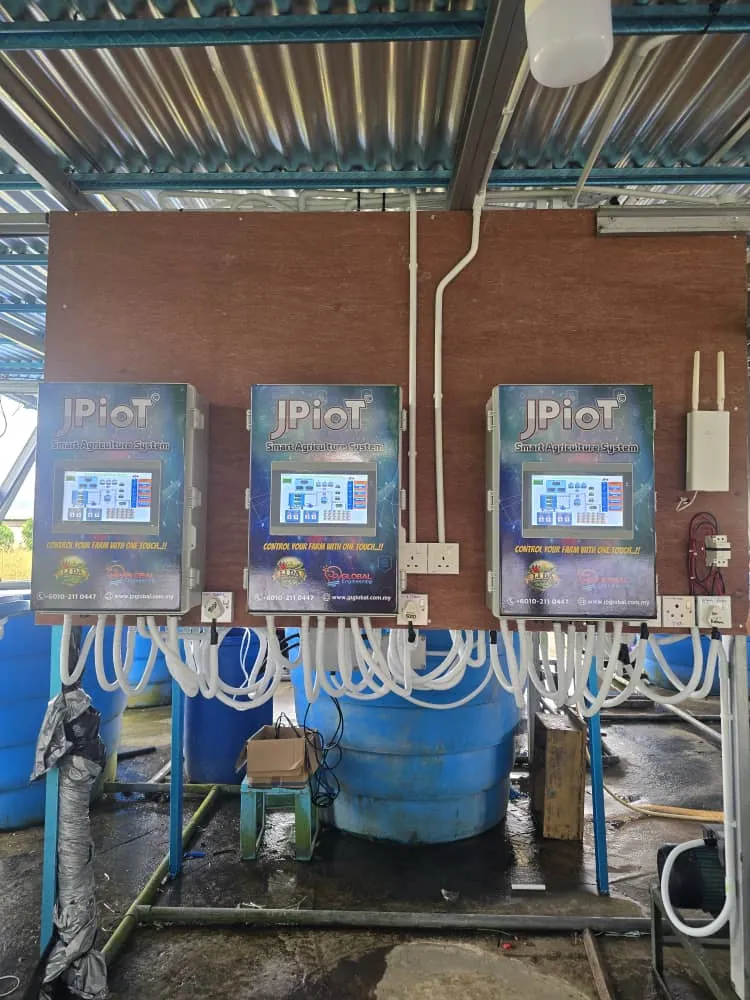
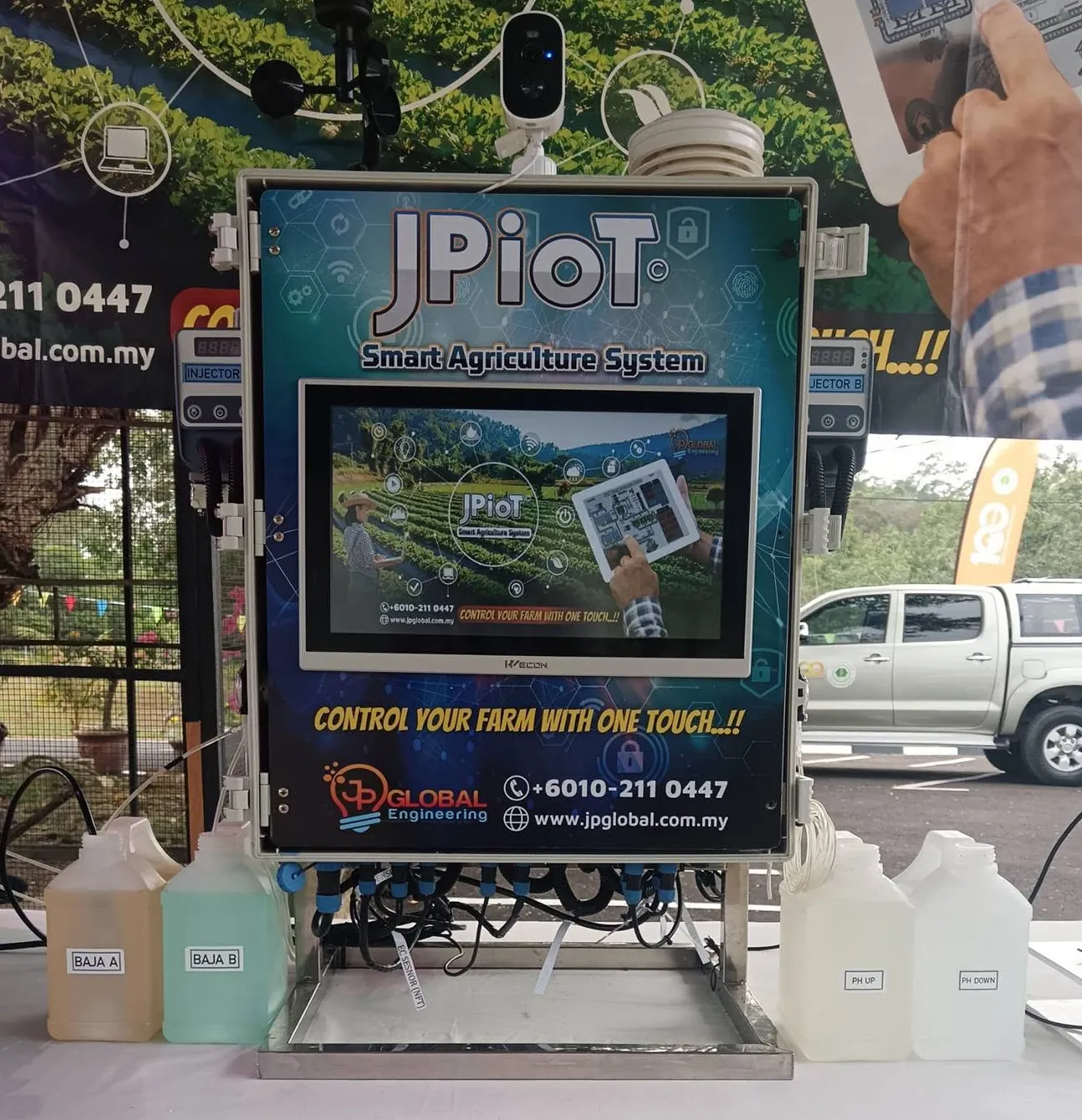
Three JPiOT controllers side by side on a board under a roof, with white tubes running down to blue tanks
Three JPiOT controllers mounted above the tanks at an installation.
A JPiOT controller on a demonstration table, with dosing pumps labelled Injector A and Injector B on either side and four containers labelled Baja A, Baja B, pH up and pH down in front
Demonstration set-up: controller, injector pumps A and B, and four solution containers.
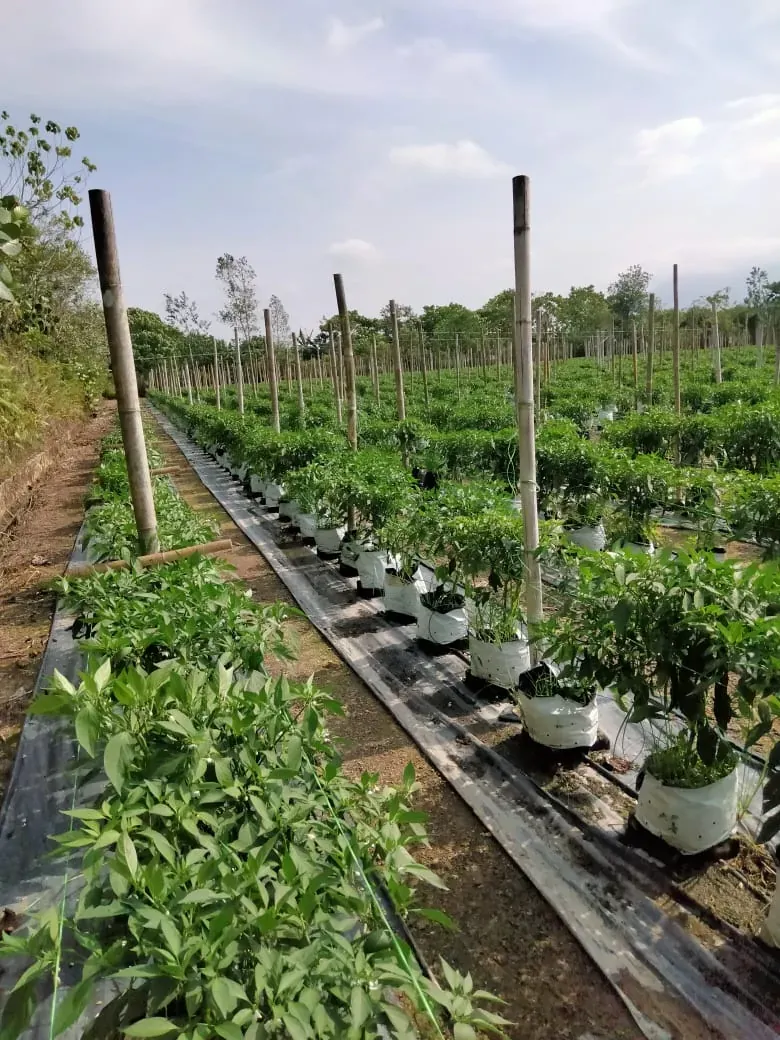
Rows of young plants in white polybags on plastic mulch, with bamboo stakes along the rows
Plants in polybags on plastic mulch, set out in rows at a farm.

Documented example

A mixing-tank installation built around a 600-gallon poly tank.

Shown as one example of the mixing-tank configuration, not as a capacity or performance specification.

For larger open-field sites

An example water-supply arrangement

  1. River or canal
  2. Solar water pump
  3. Screen and sand filtration
  4. Main tank
  5. Fertigation
  6. Drip distribution

An example from a plantation-scale design. Pumps, filtration and drip lines are sized for each site.

Weather and soil data

With a weather station or soil moisture sensing connected, irrigation can be configured to take those readings into account. What the system does with them is set for each installation and confirmed during the site assessment.

See the Smart Monitoring System

Enquire

Let’s match the system to your farm.

Tell us about your farm. Your answers go into a WhatsApp message you can check before sending.

Prefer to call?+60 10-211 0447
Opens WhatsApp with your answers filled in. Nothing is sent until you press send in WhatsApp.

Enquire